Have you ever had a passion for cars, and wanted to grow that passion but never really knew where to start or how your car works?
Surprisingly, you’re not alone! Every master mechanic, hobbyist, or restoration expert started in the exact same place — curious, unsure, and more than likely a little intimidated. Face it, anyone who has ever worked on a car, or got good working on cars can tell you a story on how they got started, what motivated them, and what mistakes they’ve made while improving their craft.
The good news?
You don’t need years of experience to start working on cars.
You just need patience, the right mindset, and a willingness to learn.
If you are a beginner, there are fairly simple approaches you can take to start working on cars. If you’re reading this from a phone, tablet or lap-top, you already hold a valuable tool in your hands to start working on cars TODAY…
There is a vast sea of information at your fingertips on how to work on cars. Finding the parts you need and learning how to work on cars has never been more easily accessible than it is today. However, your mindset on how you approach problem solving and big tasks makes all the difference.
Working on cars is not always glitter and gold. Even the most experienced of mechanics have their moments where a job just doesn’t go right. If you’re someone prepared to take on big tasks, get grease under your nails, learn from your mistakes, build your dream car and feel the enjoyment of driving your creation, then this guide is for you.
This guide is a compilation of tips to help you take your first steps confidently.
Before diving into big repairs, learn how to perform simple tasks that teach you how cars work:
These are your simple maintenance duties you need to get down in order to keep your car running smoothly for as long as possible as possible.
- Checking and changing oil
- Changing air filters
- Checking tire pressure and inflating your tires
- Changing a tire
- Replacing windshield wipers
- Refilling your wiper fluid
- Swapping out a dead battery
- Learning how fuses work
- Identifying engine components (i.e alternator, radiator and hoses, spark plugs, etc.)
These jobs don’t require advanced tools or skills — just a willingness to try. Once you begin you will find each success builds confidence for the next job you decide to embark on.
Build a Beginner-Friendly Tool Kit
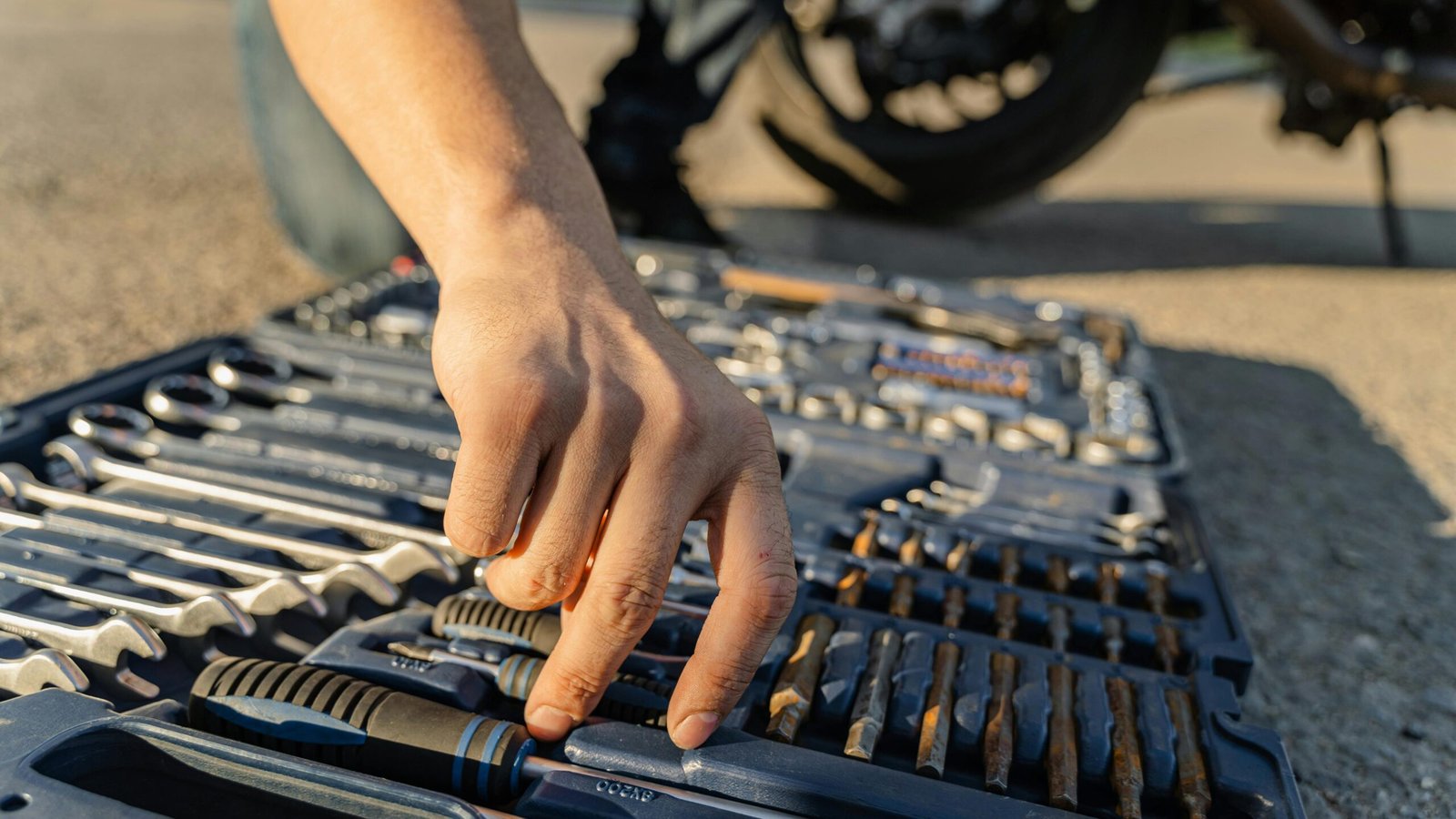
Every mechanic has a set of tools they trust to get the job done. In the beginning, you don’t need a full mechanic’s toolbox with the best and most expensive tools to start, but you want to begin with having the essentials:
- Metric & standard socket set – with extensions
- A decent Impact wrench
- Screwdrivers (flathead & Phillips)
- Pliers
- Penetrating fluid (for stuck on bolts)
- Magnet pick up tool (for when bolts fall into those hard to reach nook and crannies)
- Adjustable wrench
- Jack & jack stands
- Work gloves
- Shop towels
- Flashlight or shop light
As your projects grow, your tools will naturally grow with you. Need to shop for new tools? visit our shop where you can buy and sell new and used tools at your fingertips!
Start with a Maintenance Project
The easiest way to learn is to start doing. Pick a simple task and follow a tutorial step-by-step. Good beginner projects include:
- Oil changes
- Spark plug replacements
- Brake pad replacement
- Coolant flush
- Basic interior repairs or upgrades
- Replacing headlights or taillights
You’ll quickly discover that most repairs are far less complicated than they seemed!
Use the Right Resources
There are countless resources to help you learn at your own pace:
- YouTube tutorials
- TikTok Shorts
- Haynes or Chilton repair manuals
- Your cars owners manual
- Online car based forums – “cough” RestorationHub “cough cough“
Every car community has thousands of people eager to help beginners!
Safety First
Before you even touch a bolt, or get underneath a vehicle, keep this rule:
If you’re not 100% sure the car is safely supported, don’t get under it.
- Always use jack stands – don’t cheap out, buy those jack stands with more weight support
- TIP: Place one of your tires underneath your vehicle when lifted off of the ground as an extra layer of support should the jack stands fail.
- Work on level ground – i.e. your driveway, or, garage if accessible
- Disconnect the battery when necessary – especially in modern cars, if the doors are open for longer periods of time, this can drain your battery
- Wear eye protection – A good pair of safety goggles in case dust or debris become airborne
- Avoid loose clothing around moving parts
Safety should never be an afterthought, good habits make you a better mechanic and they keep you safe.
Learn How to Diagnose Problems
Every great car person has one skill in common:
They know how to listen.
Learn the signs of common issues:
- Car won’t start? → Possibly a dead battery or an alternator issue
- Squealing? → Possibly belts or pulleys
- Grinding? → Possibly brakes or bearings
- Rough idling? → cylinder misfire, Ignition, or vacuum issue
- Overheating? → Coolant system
- Clicking when turning? → CV axle
Diagnosing is the art you’ll build over time — and the most rewarding part of the hobby (and one you can show off to your friends).
Practice on Something Simple
If you’re nervous about breaking your daily driver, don’t panic! consider these:
- Buying a cheap project car
- Working on an old lawn mower engine
- Practicing on a family member’s older vehicle
- Visiting local junkyards for parts removal practice
Tearing apart and putting back together a $200 lemon can teach you more than months of watching tutorials.
Focus on Progress, Not Perfection
Back to my previous point, every master mechanic has their moments when jobs don’t often go as planned.
You will drop and break bolts.
Parts will and often get stuck.
You will make mistakes.
That’s normal.
It is part of the process that helps you grow from a newbie mechanic to a pro. Your mindset on how you approach these situations will make all the difference. Set a goal, and complete your mission regardless of what may come.
REMEMBER: Making mistakes is normal, how you learn is the key. There is always a solution to fixing a problem and more importantly, there are always bigger mess ups!
Take it from someone who has made enormous (and quite expensive) mistakes in my own journey.
Every stuck bolt and every frustrating moment builds valuable experience. Working on cars is a lifelong skill meant to be enjoyed, it is not a race.
Enjoy the Process
There’s a special satisfaction in repairing something with your own hands, and getting your car back on the road. You’ll be amazed what you can do just by taking these first steps and starting your own enthusiast journey.